Must be blood on the brain
This year’s symposium on Experimental Stroke Science expands understanding of the different types of brain hemorrhages.
While brain hemorrhages come in different shapes, sizes and sorts, one thing is certain: The occurrence of blood on a brain’s parenchyma is toxic. The ISC 2026 Pre-Conference Symposium on Experimental Stroke Science will advance attendees’ knowledge on what conditions can produce brain hemorrhages, the subsequent neuropathophysiological effects of the event and emerging therapies to treat patients with brain hemorrhages.
9 a.m.-5:30 p.m. | Tuesday, Feb. 3 | Room 211-213
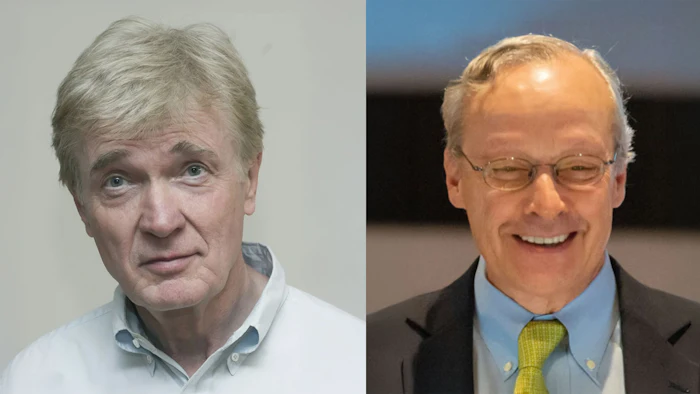
Jaroslaw A. Aronowski, MD, PhD, and J. Marc Simard, MD, PhD, are co-chairs of the aptly titled symposium, “When the Blood Hits Your Brain.” In addition to moderating the program, they were integral in selecting topics and presenters — a process that was evidence-based and founded on peer-consensus.
Investigators will share their impactful work on the causes and consequences of intercerebral hemorrhages (ICH), intraventricular hemorrhages (IVH) and subarachnoid hemorrhages (SAH). The research in this area, which is predominantly preclinical discoveries in animal models and humans, is highly likely to inform future clinical translation, said Simard, who is the Dr. Bizhan Aarabi Professor of Neurosurgery at the University of Maryland.
Interest in this area has peaked since results of the ENRICH trial were published in The New England Journal of Medicine in 2024. It was the first successful trial to prove that early minimally invasive removal of ICH leads to better functional outcomes compared to guideline-based medical management.
The day’s sessions will be thematically organized and are sure to offer the latest insights.
“I hope attendees gain understanding of the potential new approaches that are being developed to treat the blood-affected brain,” said Aronowski, who is a professor in the department of neurology at UTHealth Houston.