Assessing changes, additions to 2026 acute ischemic stroke guideline
New guidance is a landmark expansion in treatment recommendations.
The American Heart Association and the American Stroke Association have released their 2026 Guideline for the Early Management of Patients With Acute Ischemic Stroke, a sweeping revision that replaces the 2018 edition and its 2019 update. The guideline provides the latest recommendations in a single document for clinicians caring for patients with acute arterial ischemic stroke.
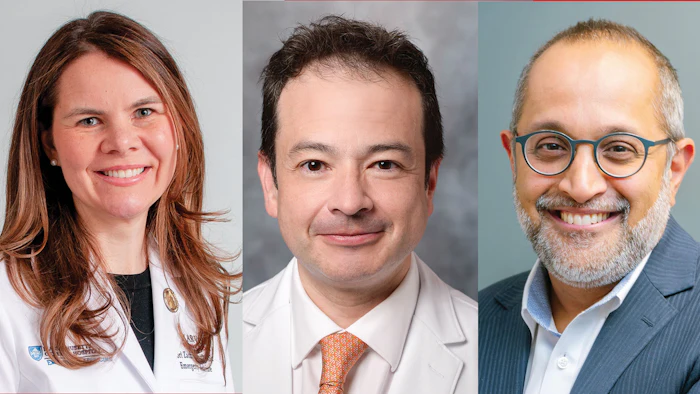
Kori S. Zachrison, MD, MSc, FAHA, a co-vice chair of the guideline writing group and an associate professor of emergency medicine at Harvard Medical School in Boston, described the changes as “transformative” and “reflective of a rapidly advancing field.”
The table covering new, high-impact recommendations fills over a page,” said Zachrison, who is among the panelists Thursday at the session “What’s New in the 2026 Acute Ischemic Stroke Guideline: Process Overview and Key Updates From
the Chairs.”
“From the prehospital perspective, the guidelines now include recommendations related to the implementation of mobile stroke units, which I think many will be pleased to see,” she said. “We also update recommendations related to prehospital destination management of patients with suspected stroke. This was a place where we really worked to incorporate nuance into the recommendations, with an understanding that the functionality and organization of stroke systems of care really vary by setting and so there is not a perfect one-size-fits-all approach here.”
The guideline also details urgent and emergency evaluation, treatment with intravenous and intra-arterial therapies, and in-hospital management, including secondary prevention measures instituted within the first two weeks. The guideline supports the overarching concept of stroke systems of care in both the prehospital and hospital settings.
The most significant change is the first-time inclusion of detailed pediatric stroke treatment recommendations, said fellow session presenter Nestor R. Gonzalez, MD, FAHA, co-vice chair of the guideline writing group. The new pediatric guidance includes recommendations for early recognition, imaging and interventional treatment of acute ischemic stroke, said Gonzalez, a professor of neurosurgery and pediatrics at Cedars-Sinai Medical Center in Los Angeles.
“This is a remarkable shift that establishes the foundation for future research and clinical consensus in an area historically lacking strong evidence-based direction,” Gonzalez said. Pediatric stroke specialists are expected to welcome the new guidance as a long-awaited step toward addressing a critical gap in stroke care, he added.
Another change in the 2026 guidelines is the expanded use of thrombectomy and evolving medical management. New recommendations significantly broaden eligibility for endovascular thrombectomy, a now-established standard of care for adults with large vessel occlusions. Gonzalez said recent clinical trial data supports expanding thrombectomy to populations previously excluded, potentially increasing the number of patients who can benefit.
Medical management updates include:
- The introduction of tenecteplase as an alternative firstline thrombolytic agent.
- Extended treatment windows using advanced imaging for patient selection.
- Revised guidance against intensive early blood pressure and glucose reduction.
- Strengthened recommendations for early oral anticoagulation and dual antiplatelet therapy in some secondary prevention scenarios.
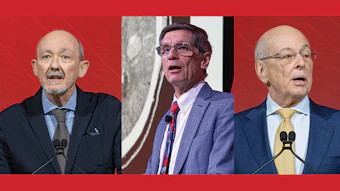
Shyam Prabhakaran, MD, MS, FAHA, chair of the guideline writing group, noted that these updates reflect a “rich” and fast-evolving evidence base, with more than 25 new clinical trials feeding into the recommendations. Prabhakaran, another session panelist, is a professor and chair of neurology at the University of Chicago.
“We need to do more as a community and systems of care to ensure more patients are provided rapid access to these highly effective reperfusion therapies,” Prabhakaran said. “Also, pediatric stroke care needs to be a focus going forward so we can develop more evidence-based guidelines as we have for adults.”
All three panelists underscored the speed at which stroke science is progressing and called the recent updates a “living guideline” model. The Heart Association is implementing an approach to guideline updates designed to minimize long gaps between them, Zachrison said, making them more iterative and frequent.
“It’s clear how quickly the evidence evolves,” she said. “This model ensures that clinicians are working with the most accurate and up-to-date information.”
Gonzalez summarized the effort as a “rigorous and concerted evaluation” of a decade’s worth of sweeping scientific advancements.
“These guidelines crystallize a transformation,” he said, “reflecting the work of hundreds of clinicians and researchers.”